Showing posts with label hario. Show all posts

Sunday, October 3, 2010

My thoughts on the Hario Skerton Hand Grinder

One of the most important factors to brewing a good cup of coffee or pulling a good shot of espresso is how well the beans are ground.  This is the one fact that everyone seems to agree on.  As far as I know there are only two types of grinders - blade and burr.  Blade grinders are pretty much frowned upon by any respectable coffee connoisseur, however they are very cheap and for most drip coffee drinkers in the world they do the job adequately.  Burr grinders are the de facto standard in the gourmet coffee drinking world and is the only acceptable way to grind beans fine enough for espresso.  The reason why burr grinders are preferred over blade grinders is that the fineness of the grind is consistent.  Burr grinders crush the bean between a moving grinding wheel and a non-moving surface to achieve this consistency and the fineness is controlled by how close the two pieces are to each other.  Blade grinders  use a spinning blade to chop up the beans and the only way to control the fineness is by how long you let the grinder run.  This not only causes uneven sized grounds but also heat (which effects the taste) and static electricity (which makes the grains stick to the grinder). The  uneven sized grains can range from big chunks to smaller grains.  Bigger grains will be under-extracted while the smaller grains will be over-extracted, resulting in inconsistent taste from pot to pot.

It goes without saying that for my adventures in coffee I would need to purchase a burr grinder.  If it were only that easy.  First off there are two types of burr grinders - conical and wheel/flat.  Where both types will produce a consistent grind, the conical burr grinders are preferred because they allow for slower grinding speed which will reduce the amount of heat during the grinding process. Then there are other considerations such as the speed, dosing capability, the type of grind adjustment available, and of course the price.  In my current situation, price is the most important factor to me.  Unfortunately a good entry level burr grinder costs at least $300 which is out of my price range (at least for a few months).  Of course those are all electric grinders with motors in them, so take that out of the equation and you have something that I can afford.  Enter the Hario Skerton Hand Grinder:


There seems to be a consensus that this is the best grinder on the market for the price (at least at the time I bought it).  I got it from reseller at Amazon for $45 and couldn't be happier.  And you will have to take that with a grain of salt as I have nothing to compare it to except a cheap ass blade grinder that I was using previously.  I've only used it for pour over brewing but have tried multiple grind sizes.  I have no concerns that it can grind fine enough for espresso once I start using my borrowed La Pavoni.  It has a very solid construction with ceramic burr's and it is easy to take apart to adjust and clean.

The ceramic conical burr's produce a very consistent grind and don't float as plastic burr's on cheaper grinders do.
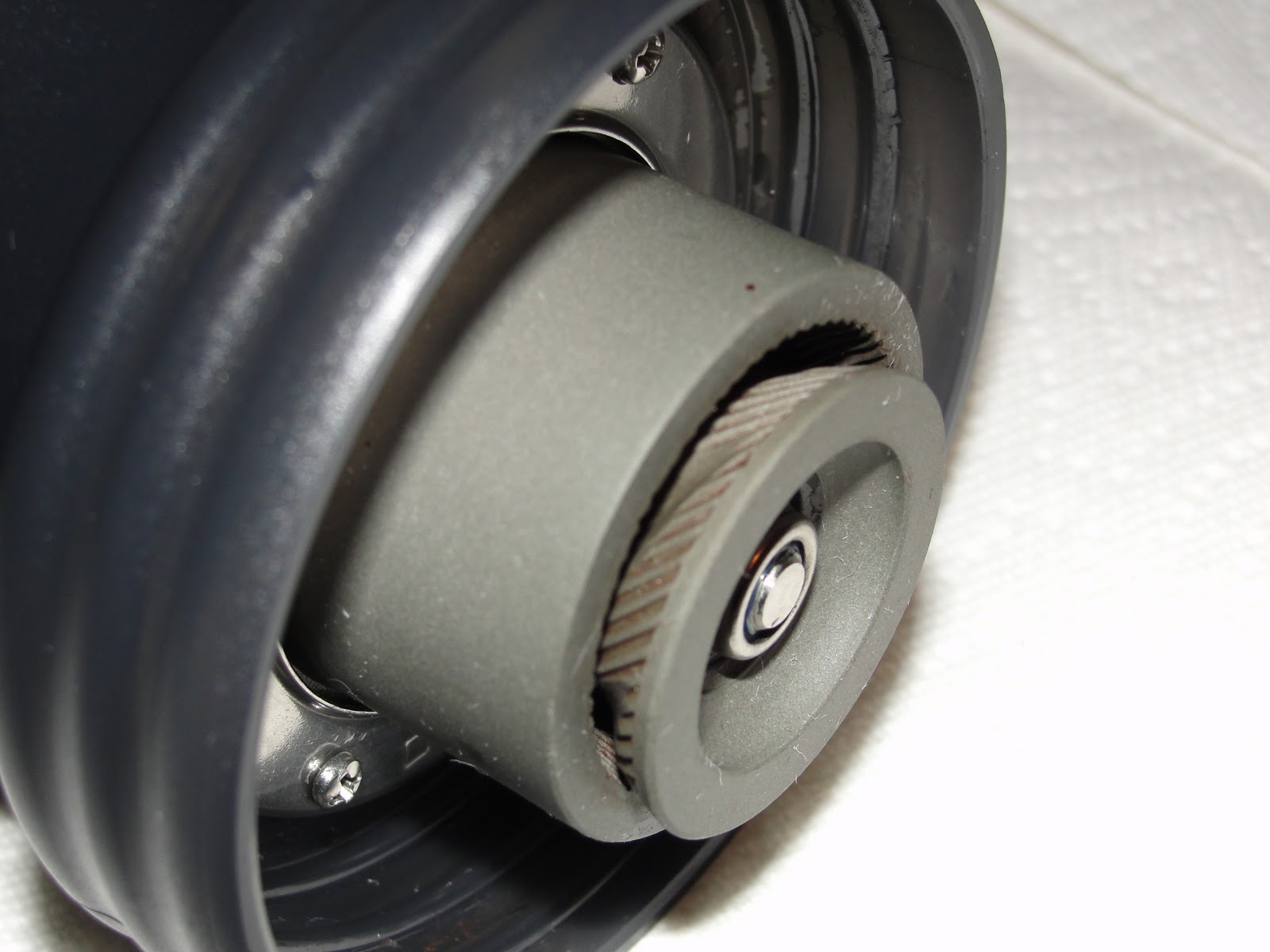
The bottom of the glass container has a rubber ring around it to prevent sliding while grinding, which is very handy and it comes with a screw top lid if you happen to grind more beans then you can use.  The handle is sturdy and the ergonomic design makes it easy to turn.  I only grind about 10-12 grams of coffee at a time and that only takes me about 1-1:30 minutes to grind with the Hairo.

If there is one thing that I don't like about this grinder is that there is no way to determine the grind size without actually experimenting with the manual adjustment to see what comes out.  It takes a few times to figure out not only how each turn of the manual adjustment affects the grind size but also the speed at which you turn the handle to ensure consistent sized grains.

Overall I'm very happy with this grinder but can't wait till I can save up enough to get a Baratza Virtuoso Preciso.

Thursday, September 23, 2010

Pour Over Brewing

My ultimate goal on my coffee adventure is to be able to have the necessary equipement to pull a great shot of espresso.  Unfortunately that requires some expensive equipment that is outside my budget at the present time, so I've settled for trying to learn other less expensive brewing methods.  The frist method I'm using is called Pour Over brewing.  It's just basically pouring hot water over freshly ground coffee beans to make a cup of coffee.  Pretty simple right.  Well for most people that might be the case but I had my challenges.

First off you need the some equipment to make this happen.  For me I purchased the Hario Pour Over kit, Hario Skerton Hand Grinder, the Hario Kettle and some coffee beans.  This is the same equipment used at Intelligentsia Cafes, so I decided that was good enough for me.  There are plenty of other pour over systems out there with the Chemex coming highly recommended also.  For the beans I decided to use the Klatch beans sold and used at Sunrise Coffee.  The reason for this is that I would be able to compare the drip coffee they make with my home brew to see the taste difference.

Still with the proper equipment and beans I had no idea what to do next.  After spending a some time on Youtube and some coffee forums I thought I had a good understanding of what to do.  Turns out I did not.

Challenge #1
This is all new to me, so I had no idea between what a fine grind is compared to coarse grind.  And although the Skerton Hand Grinder is awesome it doesn't have any setting on it to tell you what the grind size is.  After a few attempts though I was able to find a good grind size.  For the Skerton that is about half way between fully open and fully closed.

Challenge #2
It is very important for pour over brewing to be exact on your measurements and I was not.  Most instructions will tell you that for every how many ounces of water to how much weight in coffee is to be used.  Well I didn't (and still don't) have a scale for the proper measurement of the coffee.  It took a lot of trial and error to come up with using 2.5 tbs of coffee for 12 oz of water measurement.

Challenge #3
I don't like coffee (see previous post), so no matter how I brewed it, it all tasted bad to me.  After about 3 days and 15 pots of bad coffee, I was able to convince brother JJ to try a sip (he's been off the stuff for about a year now so he was reluctant).  At first I thought he was messing with me when he said it was a really good cup of coffee, but it turns out he was being genuine.  The true test is going to come on Friday when I visit my Mom and sister to have them try it out.

Not only was I able to overcome these challenges I was able to learn new things like what over-extracted and under-extracted meant and how they tasted and how to avoid them.  Now once approved by Mom and sis I will work on perfecting this technique and deciding what to tackle next.

Here is a summary of my Pour Over brewing process

Equipment:

- Dripper
- Filters
- Kettle
- Coffee
- Grinder
- Scale (optional)
- Measuring spoon (optional if you have a scale)
- Thermometer

My Parameters:

- 12oz of water
- 2.5 tbs of coffee
- Coarse grind setting
- Water at 200 degrees
- Total brew time is between 2:00 and 2:30 minutes

Step by step

- Place a dry filter in the Dripper
- Pre-wet the filter and pot with hot water
- Pour out water in the pot
- Grind the Coffee
- Place coffee in the Dripper with the pre-wet filter
- Smooth out the grounds so that they are somewhat even in the filter
- Pour just enough hot water over the grounds to wet the top and start a coffee bloom
- Wait at least 30 seconds
- Slowly pour in rest of the water by starting in the middle and working your way out to the sides in a circular motion
- (Optional) Once all the water is in the Dripper, stir the slurry (the water still waiting to make its way through the filter
- Drink and enjoy